
Why I Don’t Believe in Confidence (And What Matters More)
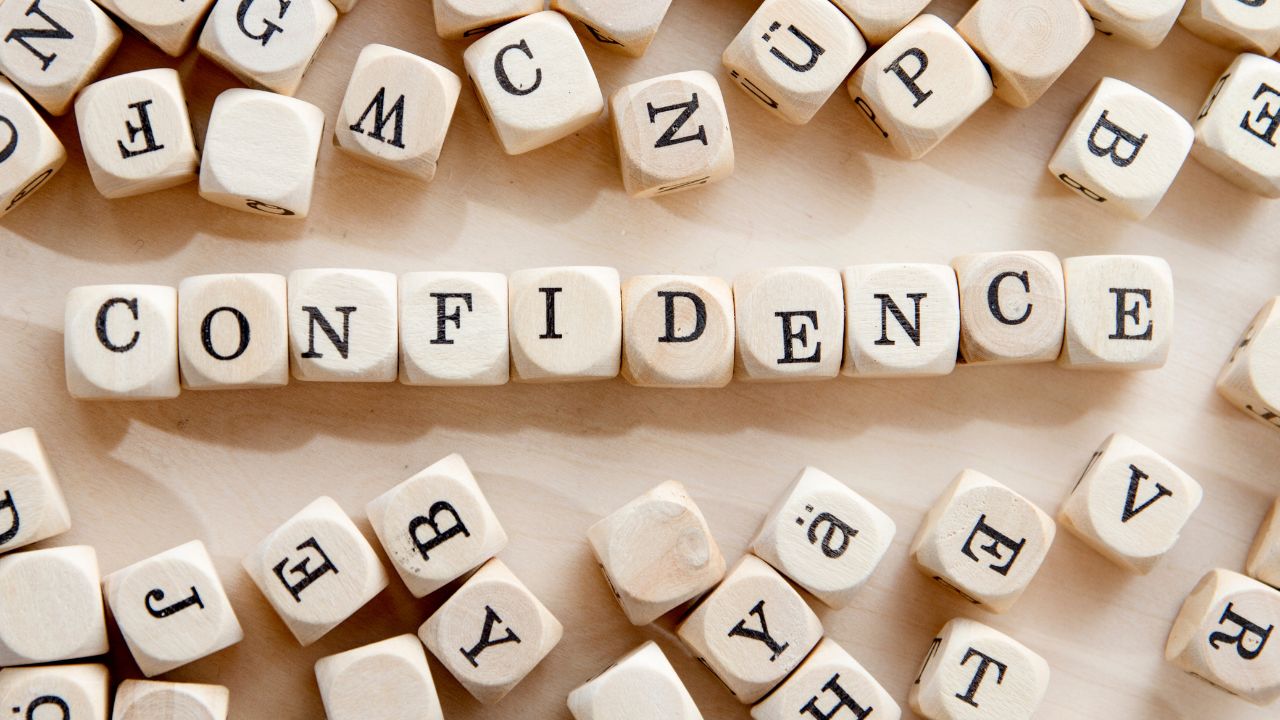
Okay, I don’t believe in CONFIDENCE.
Yep, you heard that right. I don’t believe in CONFIDENCE.
It’s not that I don’t believe confidence exists. I just don’t believe it’s reliable. It’s not something you can count on.
Here’s why:
- You can FAKE confidence.
- You can SHAKE confidence.
The Problem With Confidence
Let’s start with the obvious: you can fake confidence.
We’ve all seen it. That person who comes off as confident, talks way too much about themselves, believes they’re the best at everything but really just gets on everyone’s nerves.
We even have names for these people, from the grade-school lunchroom to the boardroom of the biggest company. Come on, you can say it:
- “Here comes Ms. Know-It-All.”
- “Can you believe what that braggart said in the meeting?”
- “Isn’t she a smarty-pants…or a smart a__?”
So clearly, confidence is not a trustworthy measure of how successful someone is or how accomplished they will become. Confidence isn’t a bad word; it’s just been used in very misaligned ways.
Let’s break it down.
What Confidence Really Means
The word confidence has Latin roots meaning “with trust” or “with persuasion.” It’s about how you confide in others or how you show yourself to them.
Many people come to me saying they want coaching so they can be more confident—that they could do more in their life and career if they just had CONFIDENCE.
That’s when I call foul.
The way confidence is typically used in conversation is about portrayal—how you present yourself or persuade others to see you a certain way. And if someone doesn’t get you, doesn’t respond to what you’re showing them the way you intended, it can shake you.
Then what happens?
You start acting differently to get a different reaction.
You try to fit in. Impress. Survive. Thrive.
And suddenly, you’re operating as if who you are isn’t enough.
That’s where it all gets backwards.
Awareness Is More Powerful Than Confidence
Here’s what I believe instead:
Everyone is capable, whole, and resourceful—and able to create a life they love.
Yes, I said it. I mean you. And I mean me.
So if not confidence, what do you actually need to move forward?
AWARENESS.
Awareness of:
- Where you are right now
- Where you want to go
- Who the TRUE YOU really is
That is far more powerful than confidence.
Your Truth (a.k.a. Your “Muchness”)
Who you are, your unique path, what you want, and what you have to offer. That’s what you need to show the world.
When you get clear about that inner you—your “muchness,” as Lewis Carroll called it, or your Core, as my friend and fellow career coach Jeff Fischer describes in his TEDx talk—you can’t help but express it.
I just call it Your TRUTH.
Truth is another word that gets misused, but I’ll spare you the English lecture for now. For the moment, just entertain this idea:
You have a Truth that is enough, just right, and exactly who you’re supposed to be.
Check your breathing.
How does it feel to let that idea fill you up?
When we understand that our thoughts create our beliefs, and our beliefs create our actions, just imagine how powerful we become when we see ourselves as whole and capable.
You Are Not Your Title
The first step in becoming aware of Your Truth is setting aside the idea that you are your titles:
Mother.
Father.
Engineer.
Accountant.
Breadwinner.
Athlete.
Musician.
Employee.
Television host.
These are all temporary states of being.
They change over time, and in today’s world of work, they change more frequently than ever. According to the Bureau of Labor Statistics, current college graduates can expect to change careers, not just jobs, every 4½ years.
If you need to change jobs, or that change is thrust upon you, you need an anchor.
That anchor is Your Truth.
Successful people always know:
- Where they are
- What they want
- Where they’re going
“Warts and all,” as my mom says.
When You Stand in Your Truth
When you become aware of Your Truth, people start noticing it.
You don’t have to be confident. You just have to be aware, then learn to stand on your Truth and express it in ways that make sense to the people who need to be near it.
Think of it like a spring of clear water, something that nourishes others and forms vital relationships.
I once worked with a highly paid salesperson whose company changed its product in a way that no longer aligned with her Truth. She was miserable and stuck.
She knew her Truth. What she didn’t know was how to express it clearly.
Once she found the words, the opportunities came to her, multiple job offers, one of which she had to turn down.
She planted herself where she could grow and make the difference she wanted to make in the world.
Amazing.
Not Everyone Will Get You (And That’s Okay)
Some people will be repelled by your Truth, not because it’s wrong, but because it doesn’t fit with their version of truth.
That’s okay. There is room for all of us.
We just lived through a presidential election. Mud-slinging, opinions, he-said/she-said—it was everywhere. I even debated politics with my mom.
We share the same Truth about family well-being, health, education, and equality but disagreed on which candidate aligned with it.
And guess what?
We still pass the butter at dinner.
That kind of acceptance doesn’t always happen when you live your Truth, but it can.
When You Change, Some People Fall Away
When I changed from teacher and counselor to coach and business owner, some people rejected my ideas.
“Why would you give up a steady paycheck?”
“What are you thinking?”
That’s okay. They don’t get it. They don’t get me.
I often remind clients:
“Just because you’re good at something doesn’t mean you have to do it.”
You can be good at many things that won’t bring you joy.
I have a client who loves ironing—simple, repetitive, immediate results. But doing it all day, every day? Nope.
Another client loves photography and giving photos as gifts, but when she had to do it under pressure with strict deadlines, the joy disappeared.
Coaching gives space to explore those truths without forcing answers before they’re ready.
Finding Your Truth
Some people will fade from your life.
Some will question you.
Some will cheer you on unconditionally.
Just don’t fall into the trap of trying to prove anything.
That’s how you end up holding an iron in one hand and a camera in the other—stuck, bound up, and confused.
So how do you find Your Truth?
That’s where we always begin.
With my private clients and in my workshops, we start with what you value most because awareness always comes before confidence.
Author